Scoring & oven spring: how to control the bloom
Scoring is not decoration — it's a pressure release. You decide where the loaf will open when steam and heat build up in the oven. Good scoring gives better oven spring, a cleaner shape, and more repeatable results.
Infographic
Tap the image to zoom, or download it.
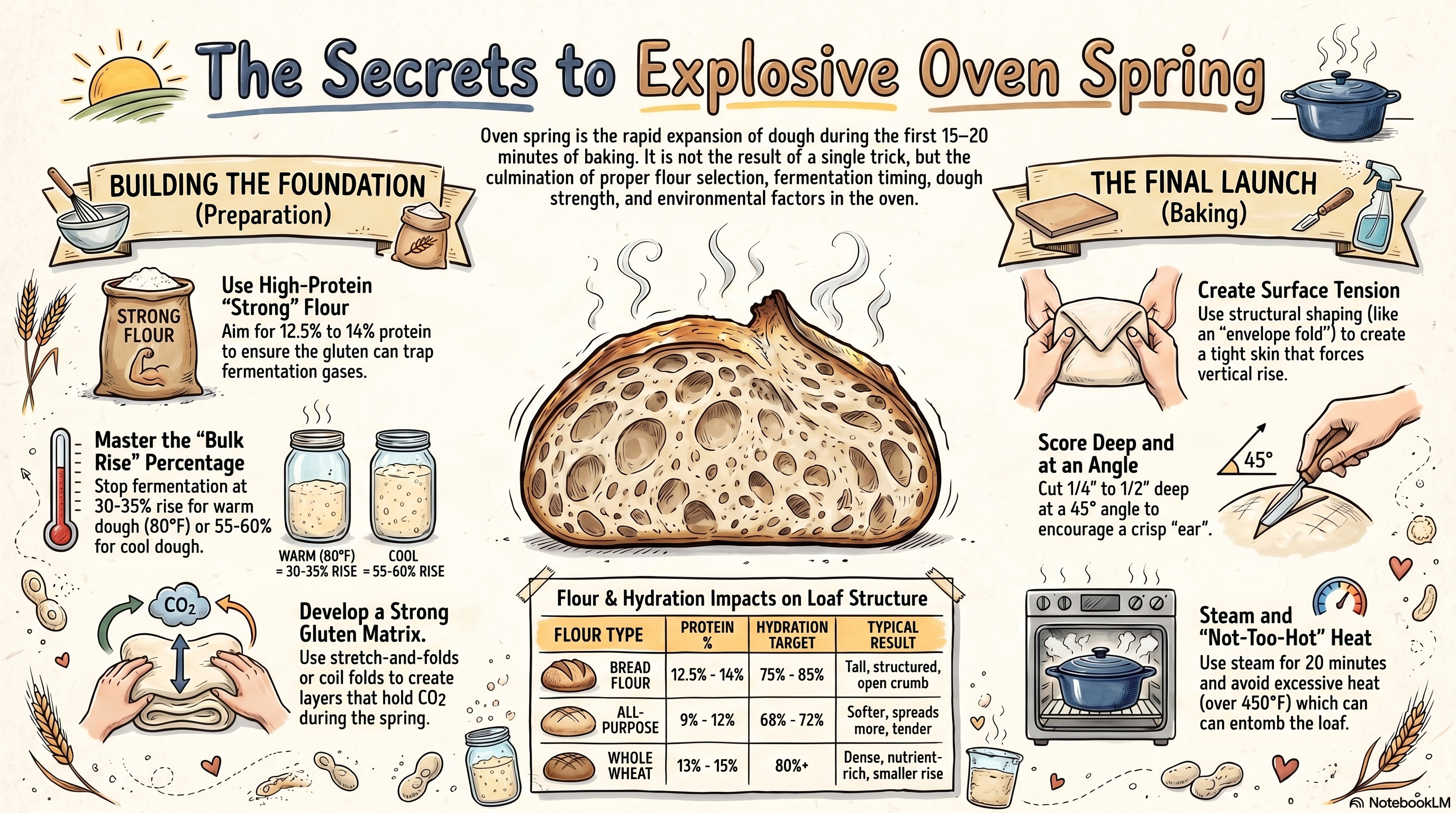
6 techniques for better oven spring
1. Score cold, firm dough
Cold dough from the fridge is easier to score cleanly. The surface holds its shape, and the blade glides instead of dragging.
2. Use the right angle for an "ear"
For a clear ear, place the main score at a shallow angle (about 30–45°) and slightly off-center. A straight-down cut tends to open more randomly and can look flatter.
3. Depth: shallower than you think
Around 0.5–1 cm is often enough. Too deep and the loaf can lose tension. Too shallow and the cut may seal, forcing blowouts elsewhere.
4. One clear vent before decoration
If you want decorative cuts, always do one main score first. Without a clear vent, pressure will find its own weak spot.
5. Sharpness beats everything
A fresh razor blade makes clean cuts. A dull blade tears the surface and releases gas, leading to messy openings.
6. Steam + high heat early
Oven spring happens while the crust stays elastic in the first minutes. Steam (Dutch oven or a well-steamed oven) buys you time before the crust sets.
Common problems (and what they mean)
Blowouts on the side or bottom
Often caused by a missing/shallow main score — or underfermented dough with lots of oven energy.
The score barely opens
Could be overfermentation (less spring left), low steam, or too shallow a cut.
Ragged, torn-looking cuts
Usually a dull blade or warm/sticky dough. Use a fresh razor and score straight from the fridge.
The loaf spreads flat
Scoring can't fix low tension. This often points to shaping/tension issues, or overfermentation.
Pro tips
Dust with rice flour or semolina: a thin layer helps you see the cuts and reduces sticking.
Practice on a strong dough: it's easier to learn the technique when the loaf holds its shape.
Change one variable at a time: blade, angle, depth, steam — it speeds up learning.